Monday, August 9, 2010

Review: Twilight Zone: The Movie


Twilight Zone: The Movie is a film based off the original television program from the 1950s. The film, directed in a prologue & four segments by John Lanids, Steven Spielberg, Joe Dante and George Miller, deals with societies and individuals whose reality becomes intercepted by objects, ideas and beings of other worldly properties and dimensions, much like the television show. The stories themselves deal with ideas that range from science fiction to fantasy to horror, but like the television show they are fueled entirely by pure imagination.

With that said, though the basis of the Twilight Zone is to explore the realms of imagination, I didn't exactly find the overall project very imaginative or exciting. In fact, a lot of it is visually dull and tonally inconsistent. The first segment by Landis has an interesting premise but feels unfulfilled (probably due to the tragic death of actor Vic Morrow), while the other two segments by Spielberg and Dante left me disengaged and bored. The last segment by Miller, an update on the series episode Nightmare at 20,000 Feet, is the only segment that is genuinely exciting and a true imrpovement over the original. Despite this, the overall quality suffers due to a lacking in style to fit the material, or from working with dull material in the first place.

What's the true failure with this film is how much of a homage it is compared to how original and fresh it could've been (while still being faithful to the original source). The opening prologue has two friends reminiscing about the old show and how great it is, and that basically sets the tone for what this movie is: a giant love letter to the original show by some fans; talented directors, but fans nonetheless. The movie doesn't attempt to do anything new in crafting a story or building tension. The only improvements come from the more sophisticated camera technique advancements since the time of the original show, and more advanced special effects (one effect, a giant rabbit monster, is an example of something that would've looked silly had been attempted back in the '60s). Even the film's intro is nothing new, completely redoing the intro of the series with updated computer graphics. You almost get the feeling that Landis, Spielberg, Dante and even Miller are too diehard of fans to even consider changing the methods of the series, and are content with applying new film techniques to a "classic" formula, because there is no point in changing the formula. It honestly doesn't work.

I personally believe the original series is still the best. It had the charm and theatricality that made the episodes so attractive and funny while still having the appropiate style to bring out the best in each episode's premise. Twilight Zone: The Movie tries to duplicate this for our times but fails to realise that with new times comes change, that even though the original series will continue to stand the test of time the basic idea of The Twilight Zone will continue to evolve and expand with new times, new techniques, and new talents.

FINAL GRADE

Twilight Zone: The Movie - 4/10

Friday, July 16, 2010

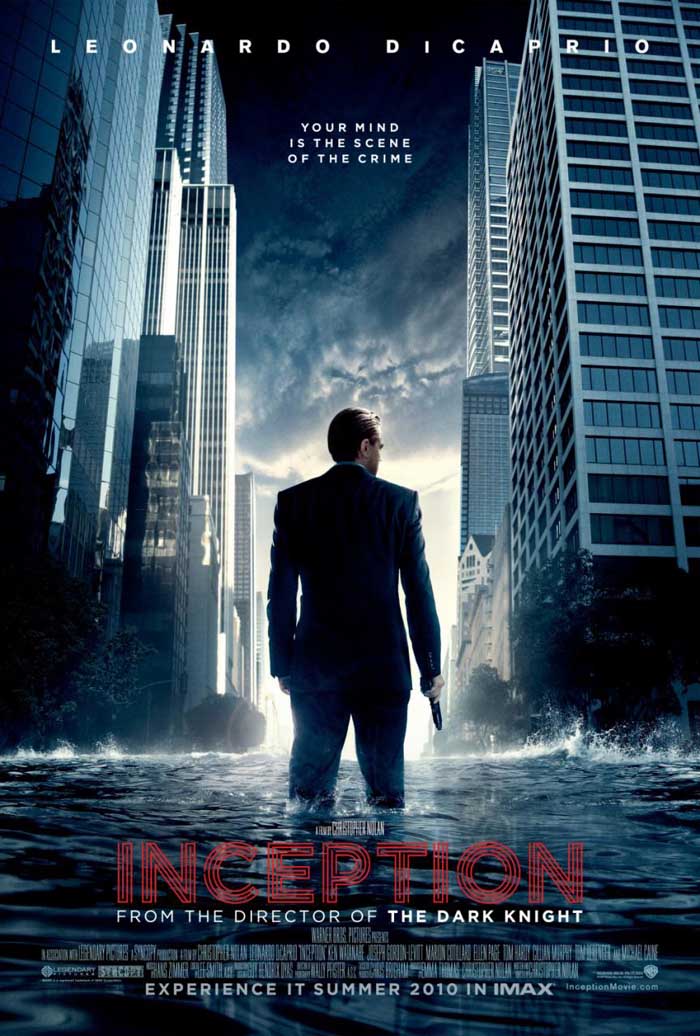
Review: Inception (2010)


After the wildly successful The Dark Knight, Christopher Nolan was given free reign to do whatever project he wanted, and he chose to go with his brain-child, Inception. The film focuses around an extractor named Dom Cobb who is given the special task of inception, planting an idea in the mind of his target so that the target believes that the idea is originally theirs and not foreign.
To get straight to the point, this is a terrific film, and to describe any other aspect of the plot and characterization would be pointless because Inception is a film you should definitely see and not hear about second-hand. If you see this film and love it as well, you'll do your friends and family a great service by not revealing anymore of the plot to them or how the film unfolds.
What I can say is that the performances are top-notch from every actor, the blending of special effects with classic staging & stunt work is stuff we've seen Nolan excel at with his two Batman films but really tops himself with this film, and the action itself is very well done and spectacular.
As I said, the performances are great from the actors all-around. No one really takes a misstep at any moment during this film and they're all a delight to watch, but Leonardo DiCaprio and Marion Cotillard really shine as they provide Inception with its emotional core.
The special effects, both practical and CG, blend together seamlessly, allowing Nolan to create an environment that is both fantastical and believable. These effects work to help give the action sequences some exciting spectacle, but the action itself is very traditional, borrowing a lot from classic Hollywood action films. The film never forgets its roots, but takes what's familiar and improves on it with the way the camera moves, with the sound effects, the special effects, and especially Hans Zimmer's fantastic score.
It has been said that Inception may be too smart for audiences. This is a misconception. The film is smart, yes, but audiences can follow this movie...if they try. The film requires that you pay attention to what's going on on the screen, and if you do so you should be able to have most if not all of the rules of Nolan's world figured out. If you get up to go to the lobby or the bathroom, you run the risk of feeling alienated from everything else that's going on. But Nolan is not building up to a twist ending.
The treat with Inception is basking in the spectacular scale of the film, the tightly constructed story, and Dom Cobb's emotional journey. Once the final image flashes before a black screen, if there's any energy left in your body, you'll want to revisit this film again and again.
Final Grade
Inception (2010): 10/10
Will I ever get to that review of Batman Returns? It may come sooner than you think...

Monday, July 12, 2010

Review: Predators (2010)


Predator was originally envisioned as a vehicle for its star, Arnold Schwarzenegger, but has since grown a large fanbase of its own, creating a villain that arguable rivals the Alien of the Ridley Scott/James Cameron films, at least enough for fans to demand a crossover between the two. After the sequel, Predator 2, proved a disappointment for some fans, this popular hunter wouldn't be seen on screen again until the two Alien Vs. Predator films of the new century; the first one played it too safe, the second was more violent but poorly filmed with an uninteresting premise.

Predators, the new film, at least improves on some of these faults. For one, with the premise. The most deadly killers on Earth are kidnapped and brought to the Predator's native planet (basically one large jungle) and are hunted for sport.

When I heard about this film, I knew right away not to expect anything profound or life changing. That's not this film's agenda so I don't see a reason to expect so much out of its story. What Predators aims to do is to give fans of the original film the sequel they never got: action packed, exciting. The film does deliver this, but there are missteps here that prevent this film from becoming the experience you wouldn't mind paying another $10 to see in theaters.

Predators lacks the suspense of of the original film, but that does not mean I was expecting this film to be a horror. The first film is more of a horror, and that's mainly because the audience has no idea what they're dealing with. What is this creature? What is it capable of? Once the audience has an idea of what the Predator is, the horror of what this creature is is gone, but the suspense doesn't have to be. There wasn't really a moment in this film where I was holding my breath, wondering what to expect next, and what we did get wasn't all that surprising either. I thought the use of a jungle, like the first film, could provide some of that fear on the character's part of not knowing exactly where this creature is, but most of the second half of the film takes place inside confind spaces and never truly takes advantage of the space around the characters to create this type of suspense.

I also had a problem with some of the technical aspects of the film, mainly the way it was shot, the score, and the special effects.

There are very dark shots in this film, sometimes too dark to see what's going on. I love the use of low key lighting in a film and think it can be very powerful and striking if used properly, but during sequences in which I'd love to have a more stable look at the action (the camera movement feels hand held, as well), the lighting creates some confusing, and comes across a bit frustrating. Having said that, I'm not exactly a fan of watching films in theaters, mainly because the movement on screen feels unstable and hard to follow. Films that have tons of movement seem to play better, imo, on a home theater system where it comes across more stablized and clear. Perhaps Predators will be easier to follow on dvd, and I'm honestly willing to find out.

The two other aspects, the music and special effects, kind of distanced me from the film. The score has no real dramatic purpose throughout most of the film, often coming across like your generic action movie score. Moments in which no score would've had a better impact were accompanied by blaring horns, which came across as distracting. The moments in which the score did work were the ones that directly channelled first Predator. At these moments the score stops coming across like it could have played in any studio-assembly line action film, playing recognizable pieces from the first film, while the action mirrors that of the first film as wel, and on its own, the score works for Predators in these moments. I just wish there were more of them.

As for the special effects, they're good for the most part, but when they're bad, they're really bad. At one moment in the film there is an explosion inside a giant building that looks so much like a cartoon that it's unavoidable. Moments like this where the effects came across really fake and cheesey, distanced the characters from being threatened by it at all, and took me out of the film. If I cannot believe that the characters can be harmed by an explosion, then where is the suspense in that? Could the production not afford better effects in some of these areas? Could they not afford pyrotechnics? In the end, the effects were inconsistent in quality.

With all that said, though, I did not dislike this film. The characters in this film are probably the most interesting and fun characters to grace this franchise, at least since the first film. Except for the appearence of Laurence Fishburne, who has some fun screentime but is ultimately a wasted character, these characters are really fun. The makeup for the Predators is really well done, and the effects in creating the Predator's home planet are nice to look at.

As well, not all of the fight scenes lack thrill and excitement. There are two fight scenes in the films final half hour that are really well done. They're well edited, well lit, and have a great impact. If the rest of the fights were like this, the experience would've definitely been more enjoyable.

Overall, I like Predators enough to say that if you like films that want to entertain you with lots of action, then this film is at least worth checking out. It drops the ball in a lot of places where some slight alterations and more effort would've helped to make the film more enjoyable, but director Nimrod Antal does a good enough job that I can say I did enjoy myself, even if it was to a certain degree.

Final Grade

Predators (2010): 6/10

Coming soon, the much promised Batman Returns review, as well as a look at Christopher Nolan's new sci-fi original, Inception.

Sunday, June 20, 2010

Review: Toy Story 3 (2010)


First off, for those of you who have been kind enough to follow my first reviews so far, sorry I never followed up each week for nearly six months. I got busy with work and had to direct my commitments in that direction. Now that work has gotten lighter, I'm ready and happy to be back. As you can see, though, I'm not following up my Batman'89 review with Batman Returns, as originally promise, but instead I jave chosen the newly released Toy Story 3 as a way of easing back into my reviews, and while follow up with Batman Returns right after. Also, for any new release I review, I'm going to give the film 6 months, meaning that if I happen to review the film within 6 months of its release, like with Toy Story 3, there will be no spoilers, but after 6 months there will be, so beware...
And now...Toy Story 3.
The toys are back, but they aren't being played with. In fact, they haven't been played with for years. Andy has grown up & grown out of playing with his childhood toys. He's planning a move to college, and has to choose between throwing the toys out, sticking them in the attic, donating them to SunnySide Daycare, or perhaps taking the toys with him to college. In the end, the toys find themselves at SunnySide Daycare, which seems like a wonderful place...at first.
I'm just going to get straight to the point on this one: Toy Story 3 is a lot of things to me. It's not only the best of the Toy Story films, it's not only one of the best Pixar films, it's not only the best comedy so far this year, but it's one of the best films so far this year, and that's saying something. If you put any stock into the Oscars, then you can count on this film being a lock to win Best Animated Film and at least a nomination for Best Picture.
Toy Story 3 builds upon the story that the first 2 films started. Pixar could've just made another stand-alone adventure for the toys, rake in a couple houndred-million bucks and be on their marry way, but this film chooses to take the idea of the toys having to deal with Andy moving on with his life, which was an anticipated concern of Woody and Jessie in Toy Story 2, and gives it a very emotional core. Not only does it affect Andy, it affects the toys as well, and leads to some moments that'll bring you close to tears, working in conjunction with all that you've been through with these characters, as well as asking you to recall your own childhood memories in which your toys were a special, important aspect of you life.
Toy Story 3 is also a very cute and funny movie. That said, the humour is unlike the style of the previous films, and gets a little dark and twisted. I wont go into detail by listing moments, since I think you should see it for yourself if you haven't already, but I will say that some of it has to do wih the aesthetic of the characters, our preconceived ideas we have about certain characters, as well as our knowledge about different (kinds of) movies and even some parallels with real-world events of the past decade or so. Will kids like this humour? Hard to say. I've read some reactions that cite the movie as too dark for children, some even from parents. Can't say if that's completely accurate or not, but what I do know is if I was a 5 year old and I saw this film, I wouldn't mind one bit.
Lastly, the animation is great, the script is solid, and the voice work is absolutely fantastic. Toy Story regulars Tom Hanks, Tim Allen, and Joan Cusack return, as well as many others, and they do just an awesome job bringing these characters to life once again, to make us both laugh and cry. There are several new voices as well, the one that stands out the most is Michael Keaton as the Ken doll in a very funny performance.
In short, Toy Story 3 is simply a wonderful experience, for people who've grown up with these films and those just discovering it. It's absolutely hilarious, and will tug at your heart. In an age where film makers tend to misfire on the 3rd film in a trilogy, Toy Story 3 fires on all cylinders.
Final Grade
Toy Story 3 (2010): 10/10
Coming soon, my review of Batman Returns. Will it be the best Batman film of the Burton/Schumacher era, or at least give Batman'89 a run for its money? Stay tuned...

Friday, January 22, 2010

Review: Batman (1989)


When the camp appeal of the Batman television show wore off, the show was cancelled and comic sales plumated yet again. In 1969, writer Dennis O'Neil and artist Neal Adams set out to return Batman to the dark, grim avenger Bob Kane and Bill Finger invisioned him as. Though O'Neil and Adams had tremendous success in returning Batman to his darker ways, becoming extremely popular with fans, their efforts still did little to help the declining comic sales..


In 1978, Superman exploded on the movie screen, so naturally, Warner Bros. decided to follow him up with Batman. But as DC Comics completed the task of making the Batman comics darker again, it now fell upon Warner Bros. to deliver a dark Batman film that would be as acceptable to the public as the television series was back in the '60s.


The project went through several scripts (one script combined the darkness of the '30s comics with the campiness of the '50s & '60s comics) and several different director & actor combinations (such as Ivan Reitman to direct, and Bill Murray as Batman). But with the talents of Tim Burton and actor Michael Keaton, along with the determination of die-hard Batman fan & producer Michael Uslan, the first dark Batman film from Warner Bros. was delivered to the public in 1989.


The film's plot appears pretty straightforward. Batman is a mysterious vigilante whom everyone, from reporters to public officials, believes is made up, save for two journalists, Alexander Knox and Vicki Vale. Jack Napier is the right hand man of mob leader who becomes horribly disfigured in a failed attempt to hide their mob connections, when Batman drops Napier into a vat of comicals, effectively turning him into The Joker. Though they never meet face to face until over half-way through, the tension between The Joker and Batman builds up as the film goes on, seeing Batman attempting to stop Joker's smilex toxin from spreading all over Gotham, and Joker find ways to steal back all the press Batman has been "stealing" from him.


Now what is there to like about this film?


For starters, the world that Tim Burton creates is simply wonderful. A hybrid of '40s and '80s culture, the world of Gotham City is a timeless gothic, visually stunning, like hell has frozen over. Gotham City, influenced by art deco designs, establishes the world for the audience that allows for the fantastic to become believable, a world where a homicidal clown battles a man dressed as a bat.


The music is absolutely fantastic. Danny Elfman's score is very operatic, complimenting the world of Gotham City very very well. The Batman march is quite possibly the most famous of Batman themes for years to come; they simply walk hand in hand together.


The character of Batman is honestly not my favorite interpretation, but it is still very much Batman. Michael Keaton is fantastic at playing the troubled Bruce Wayne, a lot of the time letting his eyes tell of the character what the narrative doesn't. The Batman in this film, like his Golden Age counter-part, is a murderer, and though while I'm a fan of a Batman who doesn't kill, the film sets up a very interesting story for Burton to continue in later films, that I honestly would love to see.


While Nicholson is not my personal favorite choice to play The Joker, he's absolutely fantastic in the role, giving a ridiculous amount of energy into the cackling face of evil, a man who sees death as art and Gotham City as a blank canvas for his twisted expression. You can definitely tell Nicholson is having fun.


Now, with all that good said, is there any bad? Yes there is.


The writing can honestly get very sloppy at some parts, particularly Vicki Vale and Bruce Wayne's relationship. Bruce Wayne goes out on one date with Vicki, and all of a sudden he's convinced that she's the one? Bruce is ready to tell Vicki that he's Batman? Out of all the things that i find gel with this world, this simply does not fit.


To make matters worse, whether Bruce would've told Vale or not is irrelevent, because Alfred goes ahead and lets Vicki into the Batcave, anyways. It does fit with Alfred's desire in the film to see Bruce Wayne end up with someone and not become entirely consumed by Batman, but for Alfred to let her in after only one date?...seriously, that is Alfred's last day at Wayne Manor. Hell, considering Batman's murderous ways, I wouldn't even be surprised if Bruce personally kills him himself later on.


To add to this, while I'm completely fine with the film exploring Batman's darker side as a murderer, to have him kill people but then the police and political leaders lift him up as a hero is just puzzling to me. Given the world these characters exist in, it wouldn't surprise me if everyone is just so happy that Batman disposed of evil that they don't care how he does it, but it doesn't mean that it doesn't feel weird at all to see the film end that way.


Despite sloppy writing, the film is visually memorable. While not my personal brand of Batman, the film provides us with characters who are very much in vein of the comic book counter-parts, played very well by top notch actors. The story is classic Batman, and the music is fantastic.


Final Grade


Batman (1989): 8.5/10


Next week, Burton's follow up to this film, Batman Returns (1992).

Thursday, January 14, 2010

Review: Batman - The Movie (1966)


In 1954, came "Seduction of the Innocent". This book, written by American psychiatrist Fredric Wertham, was a full-blown attack on comics, claiming them to be a huge corruptor of the youth of America. Several heroes were targeted, but the worst recipient of this attack was Batman & Robin, as Wertham went on to claim Batman & Robin as homosexual lovers.


As a result of this book, the Comics Code Authority was put into place for all comic properties, and, by force this time, the Batman comics got significantly lighter, campier, and dumber.


Whatever darkness Batman had was now gone, and in its place was full-blown science fiction, with Batman & Robin now travelling through space, time, and fighting aliens. Even characters like Batgirl and Batwoman were introduced to refute alligations of a homosexual relationship between Batman and the Boy Wonder, not to mention the introduction of Bat-mite and Ace the Bat Hound.


Sales got so incredibly bad for Batman comics that DC Comics was considering cancelling the character altogether. But thanks to Batman: The Movie (1966) and its television counterpart, this never happened.


Batman: The Movie (1966), for this reason alone, is the most important Batman movie ever made. Not only did the movie bring Batman into popular consciousness, as well as make several of our elders Batman fans in the process, but it also helped increase sales of Batman comics, saving the character from being killed off.


But that is not why I'm going to give this movie a favourable review. Batman: The Movie (1966) gets a fair rating from me because it's enjoyable and funny to watch.


I could very well be wrong about this, but assuming you are indeed a fan of Batman, you probably love the dark, serious Batman we know of today, right? We'll...so do I. In fact I prefer it by a large margin. But that isn't to say that this movie isn't worth watching because it's the exact opposite of our preferred Batman. It's funny, cheesey, stupid, ridiculous, and I love it for that.


The plot itself is nothing to get excited about (a dehydration ray is stolen and Batman & Robin must get it back), except for the fact that four Batman villains: Joker, Penguin, Riddler, and Catwoman, are the main villains Batman has to go up against.


Really, gags aside, everyone in this movie is so much fun to watch. Adam West and Burt Ward are a delight as both Batman & Robin, with their "amazing" skills at solving Riddler's puzzles, and their hilarious & unexpecting one-liners ("Holey heart-failure!"), to name a few. These guys know the role they play isn't a serious one, and take it upon themselves to deliver the most entertaining performances possible.


The villains...what can be said about the villains that doesn't already apply to Batman & Robin (other than the whole good and evil thing)? They're just as over-the-top, just as goofy, just as entertaining to watch.


Now...the gags...I wont say much about the gags, because these gems have to be seen to believed & it's better if I don't spoil them for you, but I will say that you can expect lots of ludicrous things from this movie when Bruce Wayne & Dick Grayson are able to suit up into their superhero alter egos by simply flicking a switch as they slide down a pole.


With all that said, the film does have its small moments where it comes to a hault. There's a love story here that is only in place to advance what ever plot the film has, and I admit, the scenes revolving around Bruce Wayne and Kitka kinda drag, but from these moments spring more ridiculous moments (include one that doesn't quite refute the homosexual claims made agains the characters years earlier).


In the end, you really should go into this movie expecting a lot of fun, stupid stuff to happen. Wanting a serious Batman film? I don't think I need to tell you where to go to see that. But nevertheless, Batman: The Movie (1966) is worht seeing, and not just because of its importance, but because it's just a really fun time. The movie never tries to be anything more than a ton of campy and jokes, and on that level, it succeeds greatly.


Final Grade


Batman: The Movie : 8/10


Columbia made their serials, and 20th Century-Fox made its camp-fest. Next week, I look at Warner Bros. turn to bring The Bat to the big screen.

Friday, January 8, 2010

Review: Batman (1943), Batman & Robin (1949) - the film serials


Being my first blog entry, I'll take the time to quickly say what my blog will consist of. For the most part, I'll be reviewing movies. Sometimes I'll throw in a video game review or a review of a tv show, but for the most part the subject of this blog will be films. With that said, my reviews will not be an in-depth critical analysis. What I will aim to do with my reviews is decide if the films are entertaining, if they accomplish what they set out to do, if they engage the audience, and so on.

So with that said...

Batman quickly became a popular character once he came on the scene in 1939, so there was no doubt that a production company would bring Batman to the big screen very soon. By the time the first Batman serial made it to the big screen, the Golden Age Batman was long gone.

For Batman's first year of existence, his Golden Age, he was a dark creature of the night, like we know him to be now. Only differences is that Batman in his original incarnation worked solo, was a murderer who gleefully killed criminals, and even carried a gun.

By the beginning of the 1940s, several changes were in place. Batman had gained a sidekick in Robin (a move that increased comic sales), Batman was no longer restricted to Detective Comics & was given his own comic book, and it was in the very first issue of Batman #1 that 2 of Batman's most famous & popular villains, The Joker and Catwoman, were introduced.

But amongst all these additions, Batman & Batman comics were stripped of the darkness brought in Batman's first year. Batman was no longer a killer, and the comics got considerably lighter, in favor of protraying Batman as a respectable citizen. This image of Batman would last for most of the '40s, the decade that brought the first 2 instances of Batman on film, in Batman (1943) and Batman & Robin (1949).

These first 2 trips for Batman to the big screen were done in the style of a movie serial. Basically, every week people would make the trips to the theater to watch a 15-25 minute episode of the serial, which would always end on a cliff hanger, which would continue next week, for several weeks.

The plot of Batman (1943) delt with a Japanese scientist named Dr. Daka who has a giant lazer that destroys walls, an alligator pit, and can turn men into zombies to do his bidding. The plot of Batman & Robin (1949) is something of a who-is-it, as they battle the mysterious Wizard.

If my plot summaries sound indifferent or lazy, it's because I honestly couldn't care anyless about either of these films. Neither is technically well made, and neither is very exciting at all.

One of my first thoughts while watching either of these is why would you include such boring villains as Daka and The Wizard (who were created for these serials), when more visually interesting villains like The Joker & Catwoman are at your fingertips? Daka is no more than propaganda, and The Wizard is just flatout boring.

The cliffhanger endings leave a lot to be desired. Aside from the fact that there is obviously no way that either Batman or Robin is going to die in either of their crashes, explosions, etc., the serials often cheat the viewer, cutting out parts or showing altering shots of the cliffhangers that seem to imply a dreadful end for our heroes, only to have them come back next week having escaped from doom by a stroke of luck. The ability for our heroes to escape these parells don't come from within themselves, it comes from the hands of our lazy film makers.

In fact, in the cliffhanger of episode 10 of Batman (1943), Batman finds himslf trapped in a plane that ends up crashing, with absolutely no way for Batman to escape. So what's the conclusion at the beginning of episode 11? Batman walks away from the crash unharmed and only slightly dazed. When your hero is able to survive a plane crash with not a single scratch on him, without any logical explanation, then whatever potential the serial had to thrill you & keep you on the edge of your seat is gone. The film makers have completely cheated on this one, so who knows if they'll cheat again. All possible danger for our heroes & their allies has disappearred, so why should we even continue watching this?

While it's kinda cool seeing a Batman that's not all flash & all the heart you'd expect from the character, it means absolutely nothing when it becomes very clear that these are serials where Batman & Robin have nothing to loose and everything to gain.

On a smaller note, not much good can be said about the technical aspects of the film. Continuity isn't good, special effets aren't good, and the costuming is very bad and looks very cheap.

So...is there anything good about these serials?

Not really. And while Batman & Robin (1949) has no redeeming values, Batman (1943) on the other hand is a very important serial to the Batman mythos. Not only did Batman (1943) provide what is the bare bones prototype for the Batmobile (it's just a regular car, if you're wondering), but it also turned Alfred, who is an fat amatuer detective in the comics at the time, into the butler we know of today, but Batman (1943) also provided us with the Batcave.

So really, while neither film is entertaining enough or well written or technically well made, Batman (1943)'s significant contributions to the Batman mythos can't go unnoticed, so it deserves a rating of some sort.

Final Grades

Batman (1943): 2.5/10, Batman & Robin (1949): 0/10

Next week, I take a look at a significantly better movie in Batman: The Movie (1966).